Germany Updates Travel Advice for Serbia: What You Should Know Before You Go
28.8.2026
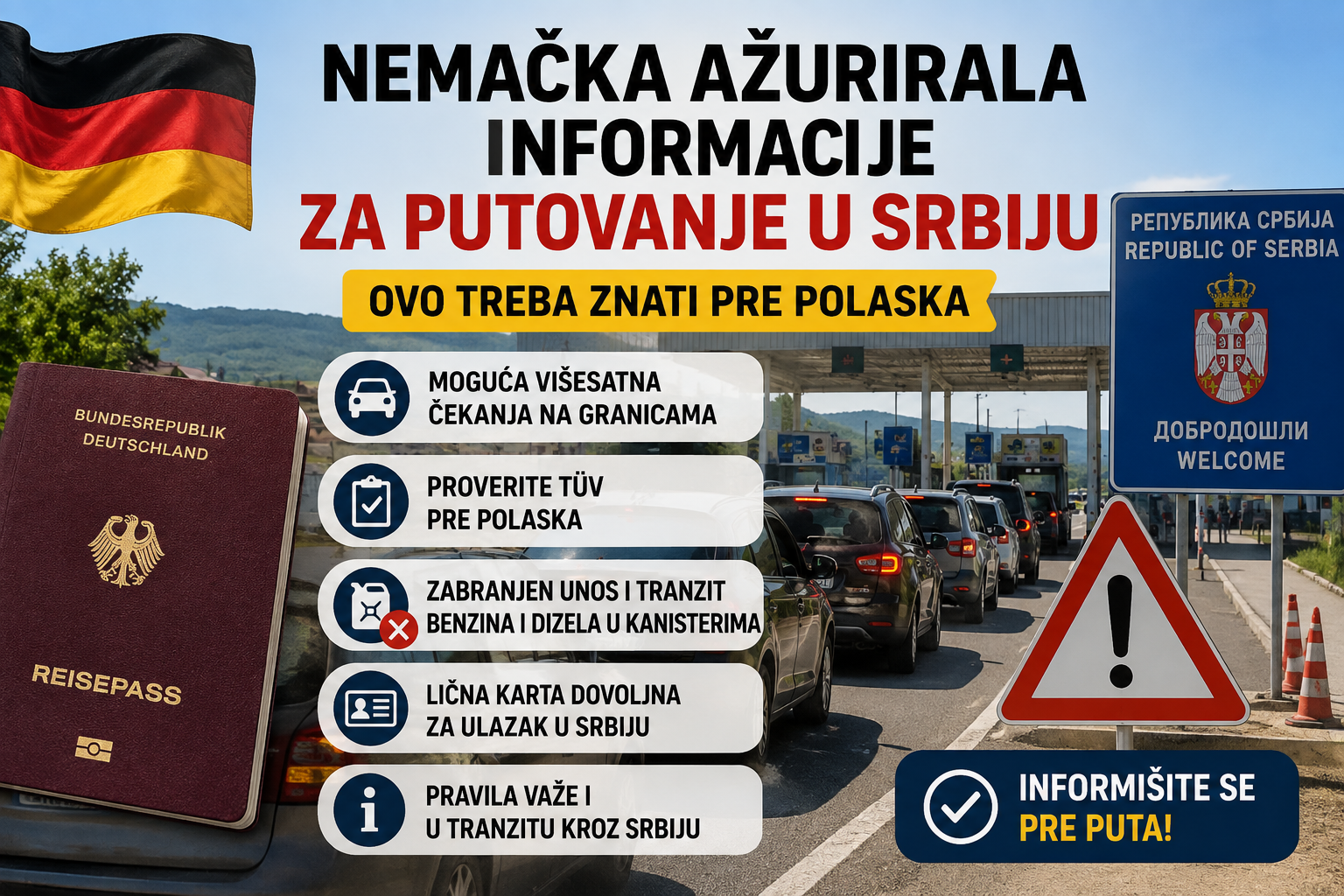
Germany’s Federal Foreign Office has updated its travel and safety information for Serbia. The guidance includes important information on border waiting times, road conditions, entry requirements and transit rules. Anyone travelling from Germany to Serbia by car should keep several points in mind.
The official travel and safety information for Serbia currently carries the date 28 August 2026, with the latest content changes covering infrastructure and traffic as well as entry and transit requirements.
The information is particularly relevant for people living in Germany who regularly drive to Serbia or travel through Serbia to other destinations in the Balkans.
Several Hours of Waiting at the Border Are Possible
One of the most important points concerns Serbia’s border crossings.
According to Germany’s Federal Foreign Office, travellers may regularly face significant and sometimes several-hour waiting times when entering or leaving Serbia.
Anyone planning a journey should therefore check the current situation at border crossings before departure and allow extra time, particularly during periods of heavy holiday traffic.
Take Extra Care on Serbian Roads
Germany’s Federal Foreign Office also provides advice regarding road conditions in Serbia.
Some regional roads may be in poor condition and inadequately lit. Drivers may also encounter vehicles with insufficient lighting, even on motorways.
Extra caution is therefore recommended, particularly when driving at night.
Important: Do Not Travel Without a Valid TÜV
There is an important warning for anyone travelling to Serbia in a vehicle registered in Germany.
The Federal Foreign Office advises motorists not to enter Serbia with a vehicle that does not have a valid German roadworthiness inspection (HU/TÜV).
According to the travel guidance, Serbian authorities may consider such a vehicle to be uninsured. This could lead to problems when entering or leaving the country.
Drivers should therefore check the validity of their vehicle’s HU/TÜV before starting their journey.
The Rules Also Apply When Transiting Serbia
Another important point concerns travellers who are only passing through Serbia.
Serbian rules governing the import of goods must be respected even if Serbia is only being used as a transit country.
This may be particularly relevant for people travelling through Serbia towards North Macedonia, Greece or other destinations.
Anyone carrying goods beyond normal personal luggage should check the applicable Serbian customs regulations before travelling.
Petrol and Diesel in Fuel Cans: Be Careful
Drivers should also pay attention to the rules concerning additional fuel.
According to the German travel information, the import and transit of petrol or diesel in fuel cans through Serbia is not permitted.
Drivers who normally carry additional fuel on long journeys should therefore take this rule into account before entering Serbia.
German Citizens Can Enter with an ID Card
German citizens can enter Serbia with a valid passport or a valid German identity card (Personalausweis).
For tourist stays of up to 90 days within a 180-day period, German citizens generally do not require a visa.
However, different rules may apply to people who live in Germany but do not hold German citizenship.
Additional requirements or visa obligations may apply, particularly to holders of German travel documents issued to foreign nationals, refugees or stateless persons.
Be Careful with Documents Previously Reported Lost or Stolen
Travellers should also take care when using passports or other travel documents that were previously reported lost or stolen and later recovered.
Germany’s Federal Foreign Office advises against using such documents unless it has been confirmed that the corresponding alert has been removed from international databases.
Otherwise, Serbian border authorities may refuse entry.
For air travellers, this can have particularly inconvenient consequences. At Belgrade Airport, a passenger who is refused entry may be returned to the airport from which they travelled.
Staying with Family or Friends? Remember to Register
This is particularly important for members of the diaspora who stay privately with relatives or friends in Serbia.
Foreign nationals are generally required to register their stay in Serbia with the relevant authorities within 24 hours.
When staying at a hotel or other registered accommodation, this is normally handled by the accommodation provider.
Those staying privately with relatives or friends should make sure that the required registration is completed.
Failure to comply with the registration requirement can cause problems when leaving Serbia and may result in a fine.
Dual German-Serbian Citizens Should Take Note
There is also an important point for people who hold both German and Serbian citizenship.
Serbian authorities generally treat dual German-Serbian nationals as Serbian citizens while they are in Serbia.
According to the Federal Foreign Office, dual nationals are required to use Serbian travel documents when entering and leaving Serbia.
Demonstrations May Cause Traffic Disruptions
Germany’s Federal Foreign Office also notes that demonstrations and political protests may take place in Serbia.
Some gatherings can occur at short notice and may result in significant traffic disruption. In certain situations, violent confrontations cannot be ruled out.
Travellers are advised to avoid demonstrations and large gatherings, follow local news and comply with instructions from local security authorities.
What Should You Check Before Leaving Germany?
Anyone planning to drive from Germany to Serbia should check several things before departure, particularly the validity of travel documents and the vehicle’s TÜV, current conditions at border crossings and any goods being carried that may be subject to customs rules.
Travellers should also be prepared for potentially lengthy waiting times at the border, especially during periods of heavy traffic.
Important: This information does not represent a new German travel warning against travelling to Serbia. It is part of the current travel and safety guidance issued by Germany’s Federal Foreign Office. Entry and customs regulations can change, so travellers should check the latest official information shortly before departure.
Source: Federal Foreign Office of the Federal Republic of Germany
Information current as of 28 August 2026